Running a power tool off grid
Can a portable power station run a circular saw?
Power tools invert the usual advice. The running draw is large, but the motor startup is larger, and a station that covers the watts can still trip on the first trigger pull. This is the clearest case where a boost rating is not the same thing as a surge rating.
The answer
- Battery to shop
- 572 Wh
- Daily energy
- 405 Wh
- Startup surge
- 2,400 W
- All devices at once
- 1,209 W
Nameplate capacity, after inverter loss and a 20 percent reserve, for 1 day.
2 devices after duty cycle, before conversion losses.
The highest single-device motor start in this load.
Continuous output the station has to hold if nothing is staggered.
The motor start near 2,400 W is the whole problem, and it is a rating question rather than a capacity one. Several units in the database do publish a 3,600 W inverter surge and clear it, so the constraint is size and price. The models that advertise a resistive boost figure instead are not counted here, because that number does not describe a motor start.
The load, row by row
| Device | Watts | Hours | Duty | Wh per day |
|---|---|---|---|---|
| Circular saw / power toolA saw runs in bursts, so duty cycle matters more than the hour figure. | 1200 W | 1 h | 30% | 360 Wh |
| LED lampWork light. | 9 W | 5 h | 100% | 45 Wh |
| Total | 405 Wh |
Duty cycle is the share of each hour a device actually draws power. A compressor fridge cycles, so its average draw sits well below its nameplate.
What this load needs from a station
- Capacity.At least 572 Wh of nameplate capacity, which is 405 Wh of daily draw divided by 85 percent inverter efficiency and multiplied by a 1.2 reserve.
- Continuous output.At least 1,209 W if every device runs at once, or less if you stagger them.
- Startup surge.At least 2,400 W of inverter surge. A resistive boost rating does not clear a motor start, so stations publishing only that figure are excluded here.
- Solar, if you plan to recharge off grid.About 95 W of panels to replace a day of draw in 5 peak sun hours. Check the station's published solar input limit, because a larger array than it accepts is wasted.
Verified models that cover it (22)
Smallest adequate model first, since the useful answer is the least you can buy that clears every limit.
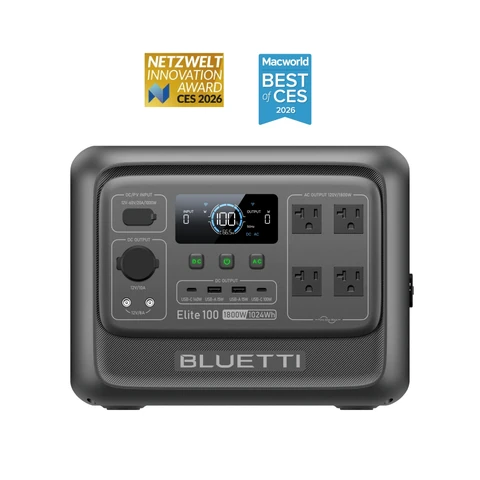 BLUETTI Elite 100 V2Smallest that fits1,024 Wh / 1,800 W / 3,600 W surge · 452 Wh spare
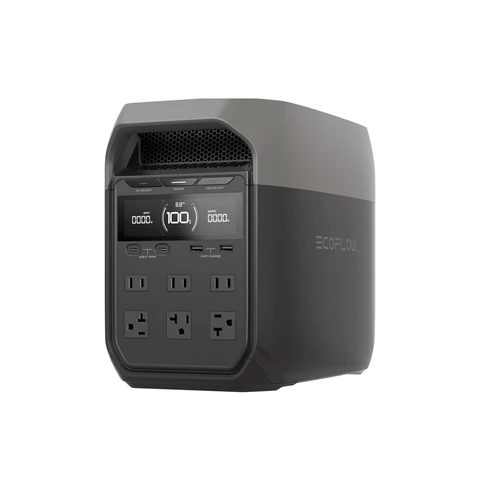 EcoFlow DELTA 31,024 Wh / 1,800 W / 3,600 W surge · 452 Wh spare
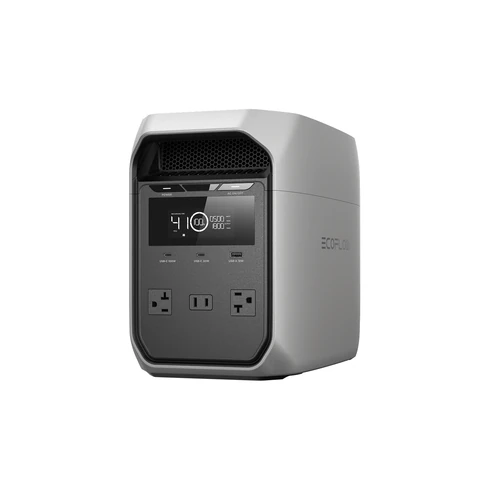 EcoFlow DELTA 3 Classic1,024 Wh / 1,800 W / 3,600 W surge · 452 Wh spare
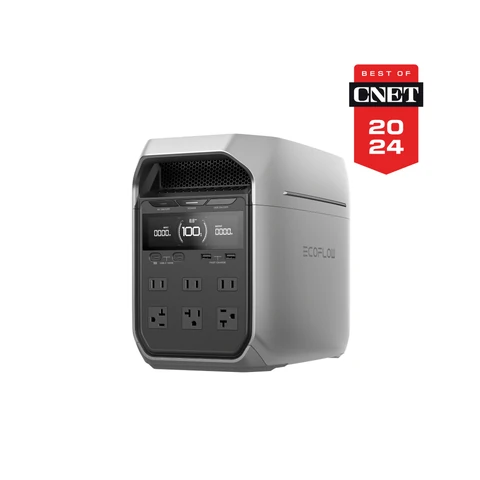 EcoFlow DELTA 3 Plus1,024 Wh / 1,800 W / 3,600 W surge · 452 Wh spare
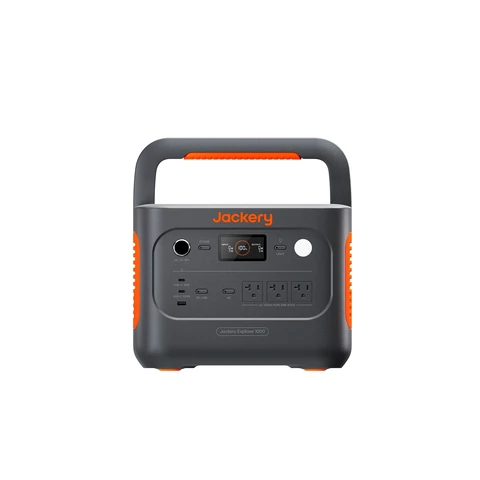 Jackery Explorer 1000 v21,070 Wh / 1,500 W / 3,000 W surge · 498 Wh spare
46 models in the database publish a resistive boost rating instead of an inverter surge, so they are not counted here against the motor start in this load. Their capacity is still listed on their own pages.
What to cut if nothing fits
A tool with a soft-start motor changes this answer more than a bigger battery does. Cutting hours lowers the daily energy but leaves the startup exactly where it was.
Questions
Why can a station run a heater but not a saw of the same wattage?
A heater is a resistive load with no startup spike. A saw has a motor, which draws a brief inrush several times its running wattage. The inverter has to survive that instant, not just the average.
Does a bigger battery fix a startup problem?
No. Capacity and surge are separate limits. A larger battery with the same inverter still cannot start the motor, which is why the checks here are listed separately.
The formulas and constants behind every figure on this page are documented on themethodology page. Source URLs for the specifications sit on eachmodel page.