Fridge through an outage, plus router and lights
What size power station runs a fridge, router, and lights during an outage?
The compressor start, not the daily energy, is the usual reason a station fails this load. A unit with enough watt hours can still refuse to start a fridge, and that is the failure this page exists to make visible before you buy.
The answer
- Battery to shop
- 826 Wh
- Daily energy
- 585 Wh
- Startup surge
- 1,200 W
- All devices at once
- 183 W
Nameplate capacity, after inverter loss and a 20 percent reserve, for 1 day.
4 devices after duty cycle, before conversion losses.
The highest single-device motor start in this load.
Continuous output the station has to hold if nothing is staggered.
A fridge startup lands near 1,200 W on most full-size models, which is far above its 150 W running draw. A station whose peak figure is a resistive boost is not treated here as clearing that start.
The load, row by row
| Device | Watts | Hours | Duty | Wh per day |
|---|---|---|---|---|
| Home refrigerator (full size)The compressor cycles, so average draw sits far below the nameplate. | 150 W | 8 h | 35% | 420 Wh |
| Wi-Fi router / modemKeeps the connection alive so the outage is not also an information blackout. | 12 W | 8 h | 100% | 96 Wh |
| LED lampA few lamps for the evening. | 9 W | 5 h | 100% | 45 Wh |
| Phone chargeOne phone charge. | 12 W | 2 h | 100% | 24 Wh |
| Total | 585 Wh |
Duty cycle is the share of each hour a device actually draws power. A compressor fridge cycles, so its average draw sits well below its nameplate.
What this load needs from a station
- Capacity.At least 826 Wh of nameplate capacity, which is 585 Wh of daily draw divided by 85 percent inverter efficiency and multiplied by a 1.2 reserve.
- Continuous output.At least 183 W if every device runs at once, or less if you stagger them.
- Startup surge.At least 1,200 W of inverter surge. A resistive boost rating does not clear a motor start, so stations publishing only that figure are excluded here.
- Solar, if you plan to recharge off grid.About 138 W of panels to replace a day of draw in 5 peak sun hours. Check the station's published solar input limit, because a larger array than it accepts is wasted.
Verified models that cover it (22)
Smallest adequate model first, since the useful answer is the least you can buy that clears every limit.
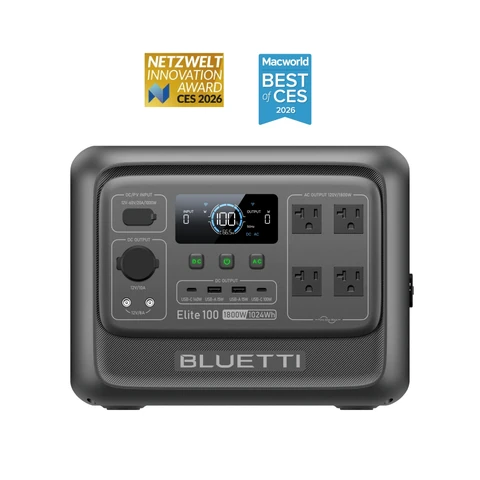 BLUETTI Elite 100 V2Smallest that fits1,024 Wh / 1,800 W / 3,600 W surge · 198 Wh spare
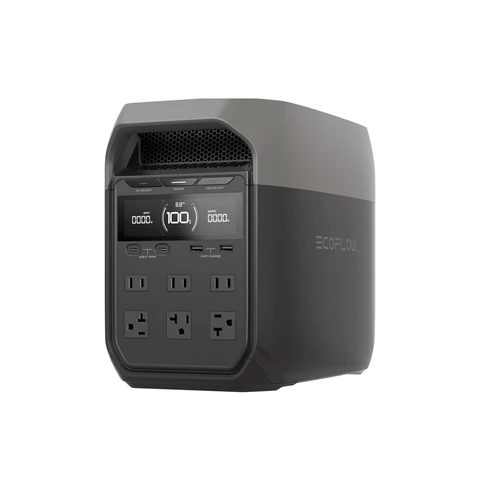 EcoFlow DELTA 31,024 Wh / 1,800 W / 3,600 W surge · 198 Wh spare
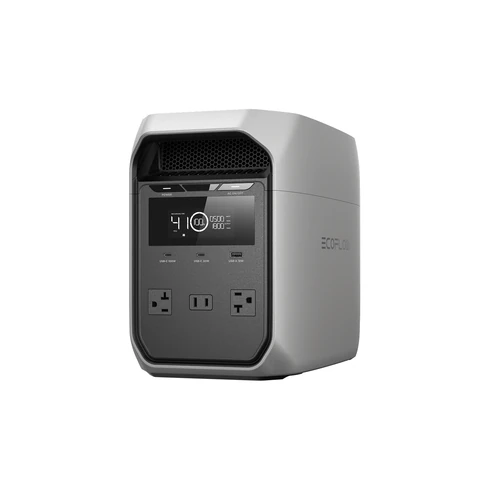 EcoFlow DELTA 3 Classic1,024 Wh / 1,800 W / 3,600 W surge · 198 Wh spare
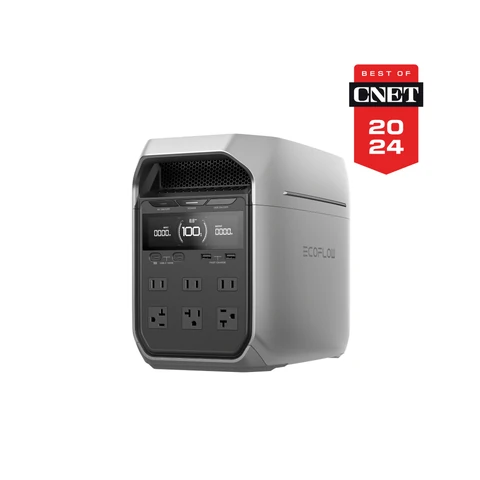 EcoFlow DELTA 3 Plus1,024 Wh / 1,800 W / 3,600 W surge · 198 Wh spare
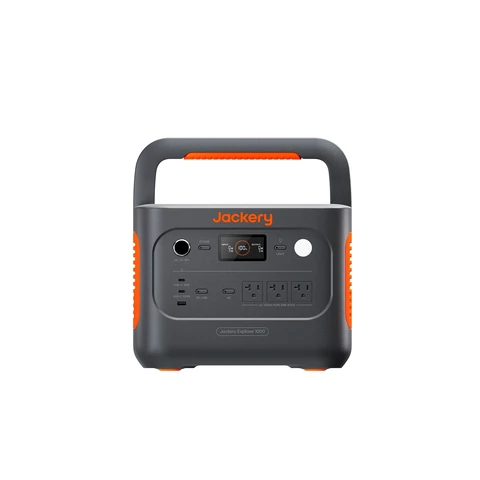 Jackery Explorer 1000 v21,070 Wh / 1,500 W / 3,000 W surge · 244 Wh spare
46 models in the database publish a resistive boost rating instead of an inverter surge, so they are not counted here against the motor start in this load. Their capacity is still listed on their own pages.
What to cut if nothing fits
Run the fridge alone on its own station, or accept a shorter fridge window. Cutting the router and lights does almost nothing to the capacity number, because the compressor dominates both figures.
Questions
Why does the fridge need so much more peak than continuous?
The compressor motor draws a brief inrush when it starts, commonly several times its running wattage. A station can hold plenty of energy and still not survive that instant.
What is a boost rating, and why is it separated?
Some manufacturers publish a rating for resistive loads, labelled X-Boost, Power Lifting, or similar. That figure does not describe how the inverter behaves against a motor start, so this site records it but does not use it to clear a compressor.
The formulas and constants behind every figure on this page are documented on themethodology page. Source URLs for the specifications sit on eachmodel page.